
Jun 05
2026
Microsoft Fabric vs Power BI: What Enterprises Should Know
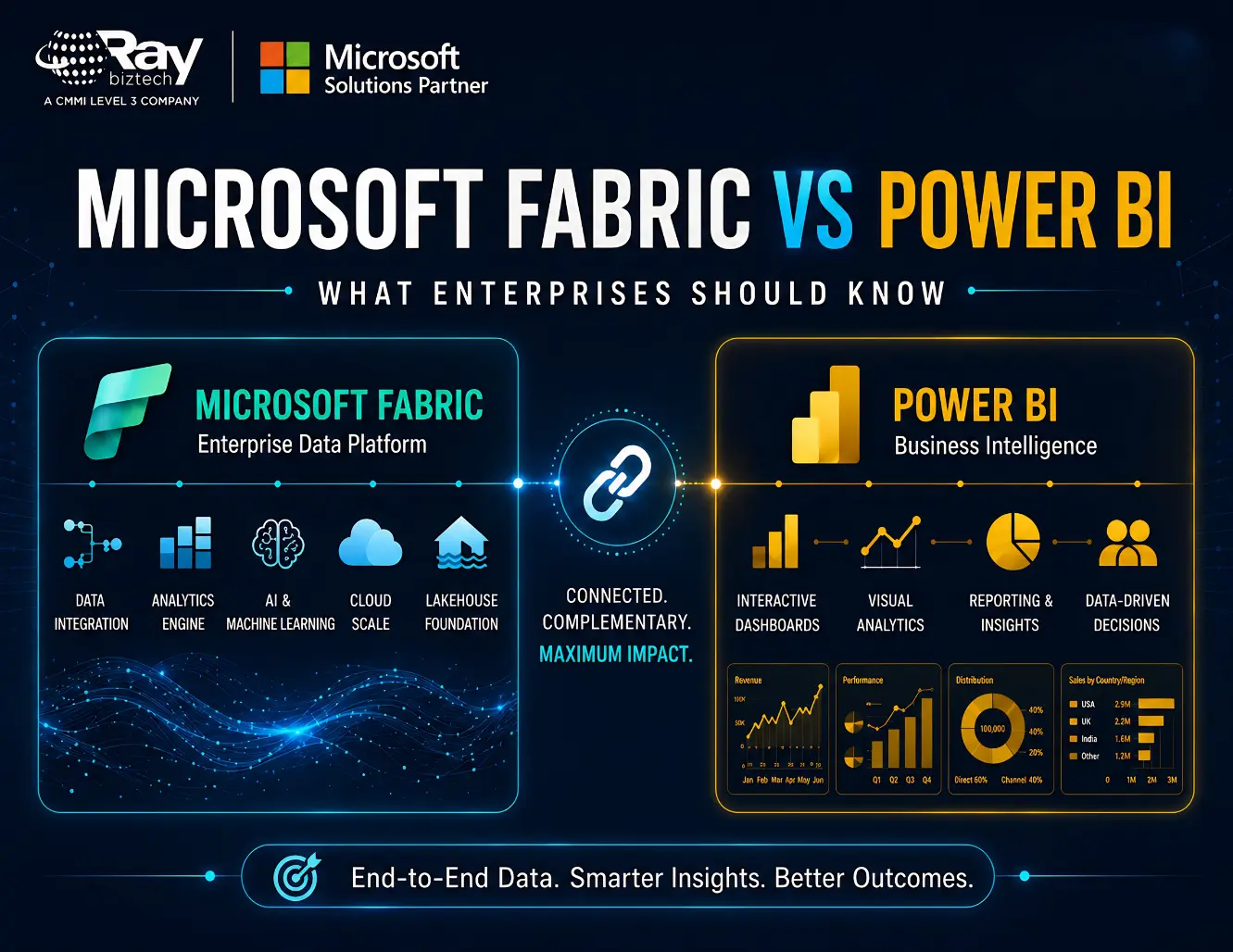 Modern enterprises require much more than just dashboards; they require trusted data, accelerated insights, real-time awareness, and an AI-driven analytics foundation. Power BI has already established its authority as the preferred BI tool to deliver modern reporting and dashboards. With Fabric, Microsoft Fabric amplifies the power of Power BI, and it combines data integration, data engineering, data lake house, data warehouse, real-time analytics, and Power BI, all in one integrated analytic platform.
The discussion is not about choosing Microsoft Fabric or Power BI. The modern organization derives real value in understanding the synergy of what the two deliver together. Microsoft Power BI enables business users to derive insights from their data. Microsoft Fabric empowers the organization to provision, manage and scale data and insights throughout the entire analytics lifecycle.
The Shift from BI to Enterprise Analytics
Enterprises have been utilizing Power BI extensively to build reports, tracking KPIs and sharing with different teams. The challenges are that the data is now coming from sources like ERP, CRM, financial systems, cloud services, custom portals, transactional systems, and even legacy databases. Having data from multiple systems can lead to reports taking longer and being inaccurate. Microsoft Fabric brings all of the enterprise data together for you with our connected data analytics platform to empower the enterprise data analytics, real-time insights, and artificial intelligence for the decisions you need to make.
Power BI as the Reporting Layer
Power BI remains central to enterprise analytics by translating complicated data into readily-available reports and easy-to-read dashboards to monitor trends, understand performance, and make better decisions. Power BI implementation services with a focus on Power BI dashboard development allows enterprises to minimize errors and manual processes while maximizing self-service BI capabilities.
Microsoft Fabric as the Enterprise Data Foundation
Microsoft Fabric goes beyond reporting by supporting the complete data lifecycle. It helps enterprises collect, transform, store, analyze and activate data from multiple sources. As a Microsoft Fabric analytics platform, it supports a modern data platform, enterprise data warehouse modernization, data lakehouse platform, real-time data analytics and AI powered analytics in one connected environment.
The Key Difference Between Microsoft Fabric and Power BI
| Area | Power BI | Microsoft Fabric |
| Core purpose | Business intelligence and reporting | End-to-end enterprise analytics platform |
| Main role | Creates dashboards and visual reports | Manages data integration, storage, engineering and analytics |
| Best value | Helps users understand business performance | Builds a trusted data foundation for analytics and AI |
| Data scope | Works best with prepared and structured data | Handles complex enterprise data across multiple sources |
| Enterprise impact | Improves reporting and decision-making | Improves scalability, governance, real-time analytics and AI readiness |
Power BI helps enterprises visualize data. Microsoft Fabric helps enterprises prepare and manage the data behind those visuals. This makes both platforms complementary. Power BI delivers the business-facing reporting experience while Microsoft Fabric strengthens the enterprise data platform behind it.
